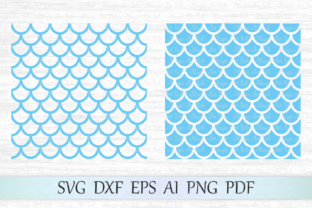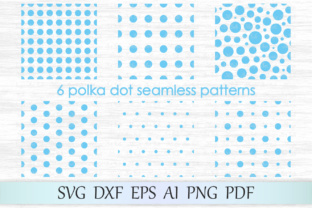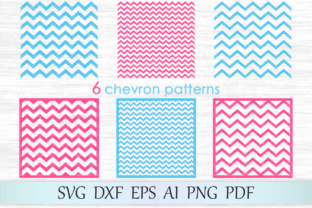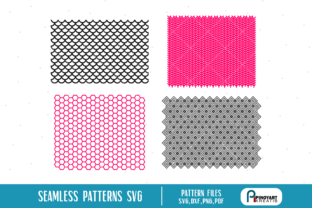
4 Seamless Patterns for Cutting, Printing & Design
Whether you're layering texture onto a product label, prepping a vinyl cut for a custom tumbler, or building a branded presentation slide deck, seamless patterns are quiet power tools in visual work. The 4 Seamless Patterns collection delivers exactly what its name promises: four thoughtfully constructed, repeatable tile-based graphics—designed from the ground up to behave predictably across software, machines, and outputs.
Why Seamless Matters—Beyond Just “Looks Nice”
A truly seamless pattern tiles without visible seams, gaps, or misalignments—no matter how many times it repeats or how large the surface. That’s not just aesthetic polish. It’s functional reliability. When you apply one of the 4 Seamless Patterns to a 24" x 36" fabric print, a full-wall decal, or a repeating background in Canva or Adobe Illustrator, you avoid manual patching, scaling guesswork, or last-minute seam fixes. That saves time—not just minutes, but consistent, cumulative hours across projects.
What’s Inside: Formats That Match Real Workflows
Each of the 4 Seamless Patterns is delivered in five formats, chosen for practical compatibility—not just technical completeness:
- SVG (Scalable Vector Graphics): Ideal for web use, vector editors (Illustrator, Inkscape), and responsive design. Scales infinitely without pixelation—perfect when you need crisp edges on a logo overlay or digital presentation backdrop.
- DXF: Native to cutting machines like Cricut, Silhouette, and Glowforge. Enables precise contour cuts, weeding paths, and layered material prep—no conversion errors or lost fidelity.
- PNG at 300 DPI: High-resolution raster output with transparent background. Ready for direct import into Photoshop, PowerPoint, or Canva—no resizing or resampling needed for print-ready mockups or social media banners.
- PDF at 300 DPI: Print-safe, universally openable, and embeddable. Used by designers submitting files to commercial printers or educators preparing classroom handouts with tactile texture elements.
No JPEGs, no low-res previews, no missing color profiles—just clean, production-ready assets that slot into your existing tools without friction.
Who Uses These—and How They Fit Real Roles
Small business owners often juggle branding, packaging, and marketing visuals alone. One of the 4 Seamless Patterns can unify a product line: apply the same subtle geometric repeat to shipping labels, thank-you cards, and Instagram story templates—creating cohesion without designing each asset from scratch.
Educators and trainers use them to add visual rhythm to worksheets, slide decks, or printable resources—without triggering cognitive overload. A soft organic pattern, for example, works well behind light text in a PDF handout, improving readability while reinforcing a calm, focused tone.
Fabric designers and crafters rely on seamless behavior for accurate yardage simulation. Because these patterns are built as true tiles (not stretched or cropped), they preview accurately in Spoonflower, Printful, or even home-printed test swatches—reducing costly reorders due to unexpected tiling artifacts.
Freelance designers and marketers frequently repurpose assets across client projects. With SVG and DXF included, the same pattern can serve dual roles: as a subtle background in a client’s pitch deck (SVG), then later adapted into a cut file for branded merchandise (DXF)—all from one source.
Not Just “More Patterns”—Why These Four Stand Out
These aren’t decorative fillers. Each of the 4 Seamless Patterns was developed with intentional contrast in scale, density, and visual weight:
- A fine-line geometric grid—low-contrast, highly versatile, ideal for professional documents or minimalist packaging.
- A hand-drawn organic motif—slight irregularity adds warmth without sacrificing repeatability; great for lifestyle brands or handmade goods.
- A mid-scale dot field—balanced spacing allows text overlay without competing; widely used in apparel tags and digital UI backgrounds.
- A bold, high-contrast linear repeat—designed for visibility at distance, useful for signage, trade show backdrops, or vinyl decals on vehicles.
This variety means you’re not choosing *a* pattern—you’re selecting the right tool for the job. And because all four share the same format set and resolution standards, switching between them introduces zero workflow disruption.
Where They Shine—and Where to Pause
These 4 Seamless Patterns excel when you need consistency, speed, and cross-platform reliability—especially if you regularly move between digital and physical outputs. They’re especially helpful if you’ve ever spent 20 minutes trying to align a PNG tile in Cricut Design Space, or discovered a seam mid-print on a large-format banner.
That said, they’re not substitutes for custom illustration or brand-specific pattern development. If your project requires proprietary motifs, trademark-aligned iconography, or complex color gradients that shift across the tile, these provide a strong foundation—but may need augmentation. Likewise, while the 300 DPI PNG and PDF cover most print needs, ultra-large-format printing (e.g., billboards >10 ft wide) may benefit from custom rasterization at higher native resolution—something to verify with your printer before final output.
Simple Integration, No Setup Required
You don’t need to install plugins, learn new software, or adjust document settings. Import the SVG into Figma for a website background. Drag the DXF into Silhouette Studio for a layered vinyl cut. Drop the PNG into a Google Slides template and resize freely—the transparency and resolution hold. The PDF opens cleanly in Acrobat, Preview, or browsers for quick review or sharing with clients or vendors.
Because every format maintains the same tile dimensions and alignment logic, you also avoid version drift: what you see in the SVG preview matches the DXF cut path matches the printed PDF edge. That consistency reduces revision cycles—whether you’re iterating solo or collaborating across teams.
Final Thought: Patterns as Infrastructure
Treating patterns like infrastructure—not decoration—changes how efficiently you build. The 4 Seamless Patterns function like reliable utilities: always available, always compatible, always predictable. They won’t replace your creative judgment—but they remove repetitive technical hurdles so you can spend more energy on messaging, audience connection, and thoughtful execution. Whether you’re prepping a single Etsy listing or rolling out a multi-channel campaign, having four rigorously tested, production-ready tiles on hand means less troubleshooting and more doing.