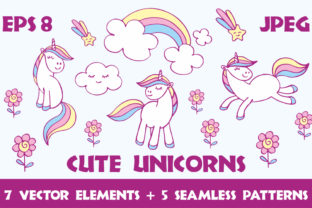
Cute Unicorns Vector Elements and Patterns
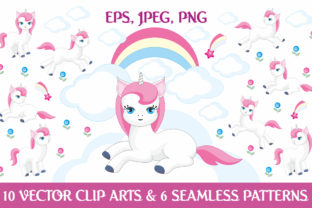
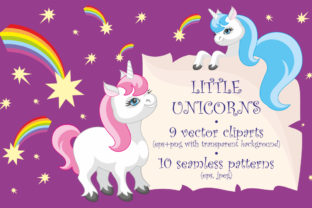
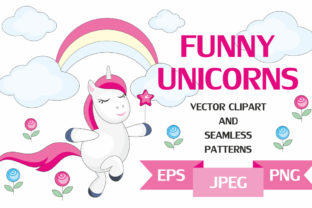
These aren’t just cartoonish doodles—they’re thoughtfully crafted, scalable vector assets with a gentle charm that avoids cliché. The unicorns feature soft curves, subtle gradients, and expressive eyes, rendered in clean outlines and friendly pastel-infused palettes. Each element breathes personality without sacrificing versatility: a little whimsy, zero visual noise. The five seamless patterns repeat with precision—no visible seams, no awkward gaps—making them ideal for backgrounds, fabric mockups, or textured overlays. The seven standalone vector elements (a galloping unicorn, a horned cloud, a star-topped cupcake, a rainbow arc, a glitter swirl, a floral wreath with horn motif, and a sleeping unicorn curled in a crescent moon) work equally well as focal points or supporting flourishes.
Where These Vectors Shine—Beyond the Obvious
Designers reach for Cute Unicorns Vector Elements and Patterns when they need warmth and approachability without leaning into childishness. A boutique skincare brand uses the rainbow arc pattern as a subtle background on product labels—soft enough to feel calming, distinctive enough to stand out on a crowded shelf. A children’s book illustrator layers the sleeping unicorn element over hand-painted textures for endpapers, scaling it up without pixelation. Bloggers building a wellness-themed digital planner drop the star-topped cupcake into habit trackers—not as decoration, but as a quiet visual cue for self-care milestones. Crafters print the floral wreath onto iron-on transfers for tote bags sold at local markets; because it’s vector-based, it holds crisp detail whether sized for a 3-inch patch or a full front-panel design.
They also bridge gaps between audiences. A small business owner launching a subscription box for tweens and teens uses the galloping unicorn as a mascot icon across Instagram Stories, email headers, and packaging stickers—same shape, consistent tone, different applications. No redrawing needed. Marketers running seasonal campaigns layer the horned cloud pattern behind sale banners on Shopify stores; its transparency-friendly build lets text remain legible even at 30% opacity. Publishers designing a middle-grade chapter book cover combine the glitter swirl with custom typography—placing it near the title to draw the eye upward, not distract from it.
Why Vector Format Matters—Practically, Not Just Technically
EPS files mean you can open these in Illustrator, Affinity Designer, or CorelDRAW and edit colors, stroke weights, or grouping instantly—no raster limitations. That’s essential when adapting assets across mediums: tweak the gradient on the unicorn’s mane for a dark-mode web banner, then re-export the same file for foil-stamped business cards. The included JPGs? They’re high-res (300 DPI), pre-optimized for quick placement in Canva, PowerPoint, or InDesign layouts where vector editing isn’t needed—say, dropping the crescent-moon unicorn into a social media post draft before finalizing in Illustrator.
This flexibility directly affects professionalism and consistency. When your brand uses the same unicorn motif across a podcast cover, merch line, and newsletter header—and each version looks intentional, not stretched or blurred—audiences subconsciously register reliability. It’s not about “cute” alone; it’s about controlled, repeatable expression. That matters whether you’re a solo blogger building trust over time or a studio managing multiple client brands with distinct visual voices.
Testing Fit Before You Commit
Before adding Cute Unicorns Vector Elements and Patterns to a project, ask two quiet questions: Does this support the message—or soften it? and Will it age gracefully in six months? A law firm’s holiday card probably shouldn’t use the glitter swirl. But a creative agency sending thank-you notes to clients after a successful rebrand? Yes—especially if the swirl echoes the metallic accent in their new logo. Context shapes meaning.
Test pairings early. Drop the rainbow arc pattern beneath a bold sans serif headline in your layout software—does the contrast create energy or visual fatigue? Try the sleeping unicorn at 12pt next to body copy: does it anchor the section or vanish? Real-world testing beats assumptions. Also check licensing: these assets are cleared for commercial use, including merchandise, client work, and digital products—but always verify usage rights match your specific distribution channel (e.g., selling templates on Creative Market vs. embedding in a SaaS dashboard).
Subtle Strengths Most People Overlook
The patterns aren’t just “pretty repeats.” Their construction allows intelligent cropping: rotate the cloud pattern 45 degrees and it becomes a diagonal texture for modern stationery. Flip the floral wreath horizontally and it frames a testimonial quote differently—without needing a new asset. That kind of adaptability saves hours during revisions.
Also worth noting: none of the elements rely on fine detail that vanishes at small sizes. The horned cloud retains its shape even scaled to 8mm tall on a sticker sheet. That practicality means less back-and-forth with printers, fewer last-minute fixes in production, and smoother handoffs between designers, developers, and vendors.
If your work lives at the intersection of heart and craft—if you value assets that feel personal but perform reliably—Cute Unicorns Vector Elements and Patterns offers more than decoration. It’s a toolkit for tone: warm but not saccharine, imaginative but grounded, playful but precise. Use it where joy needs structure, and whimsy needs weight.